MelaninRx
A digital health application designed to empower and support Black women who are pregnant or planning to become pregnant.
THE PROBLEM
THE SOLUTION
With this goal in mind, MelaninRX was designed to address the systemic gaps Black women face in pregnancy care. The solution focuses on creating a supportive, informed, and culturally responsive experience that helps users navigate pregnancy with confidence.
To guide the product design, I focused on three key pillars:
RESEARCH AND USER INTERVIEWS
We wanted to better understand how Black women experience pregnancy and interact with healthcare providers. Through user interviews and secondary research, we explored how users seek information, prepare for appointments, and advocate for themselves.
From these conversations, several recurring themes and frustrations emerged:
⚖️
🔍❓
💬❤️
In analyzing user research, we developed a main user persona that best embodied our target audience’s needs, pain points,
and goals.


PAIN POINTS
After synthesizing interview insights and research findings,
we identified two core pain points:
IDEATION
Using our research insights, we brainstormed features that would directly address users’ pain points while prioritizing emotional safety and clarity. I mapped out the preliminary information architecture and created low-fidelity sketches to explore potential solutions.
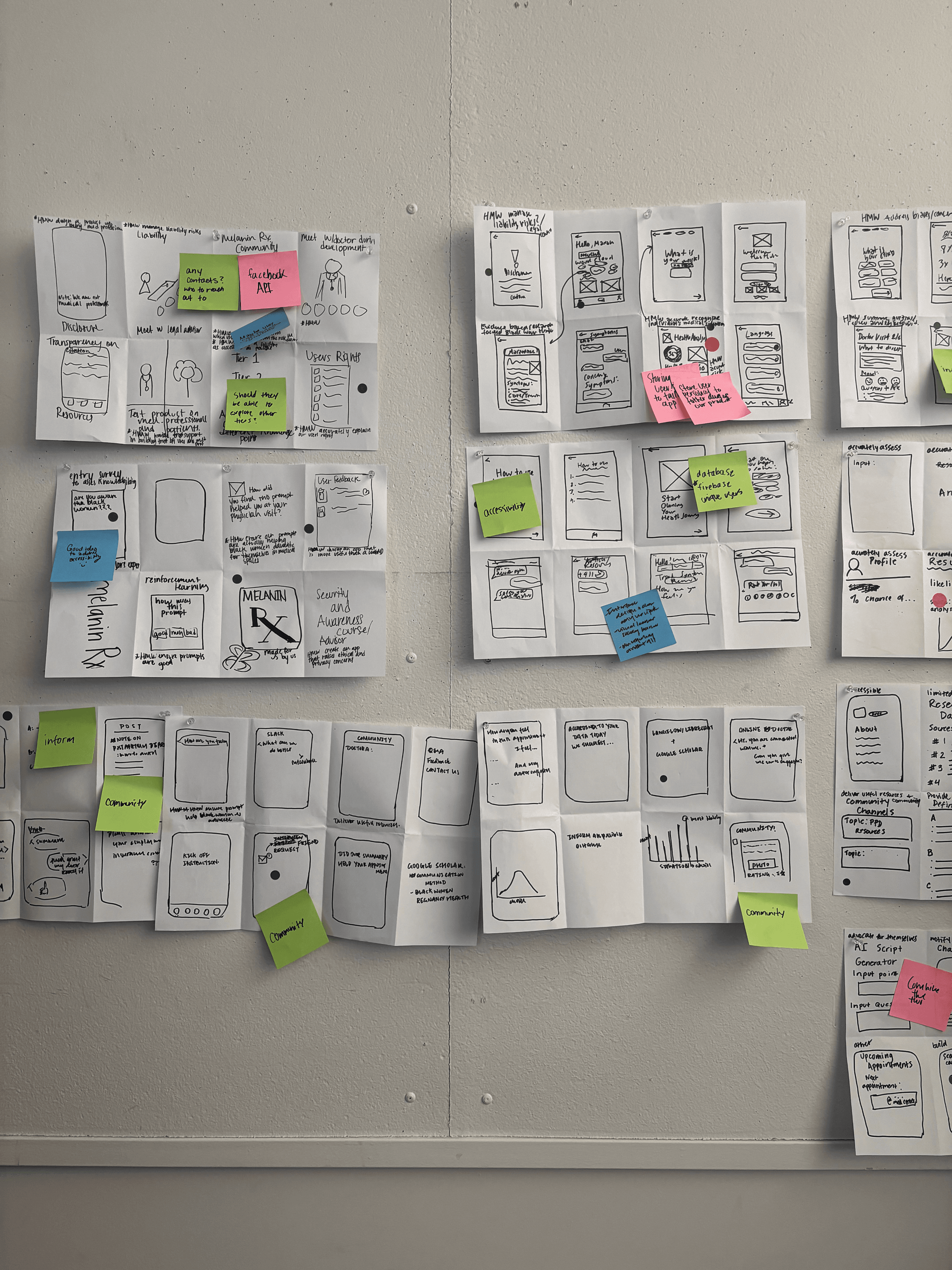
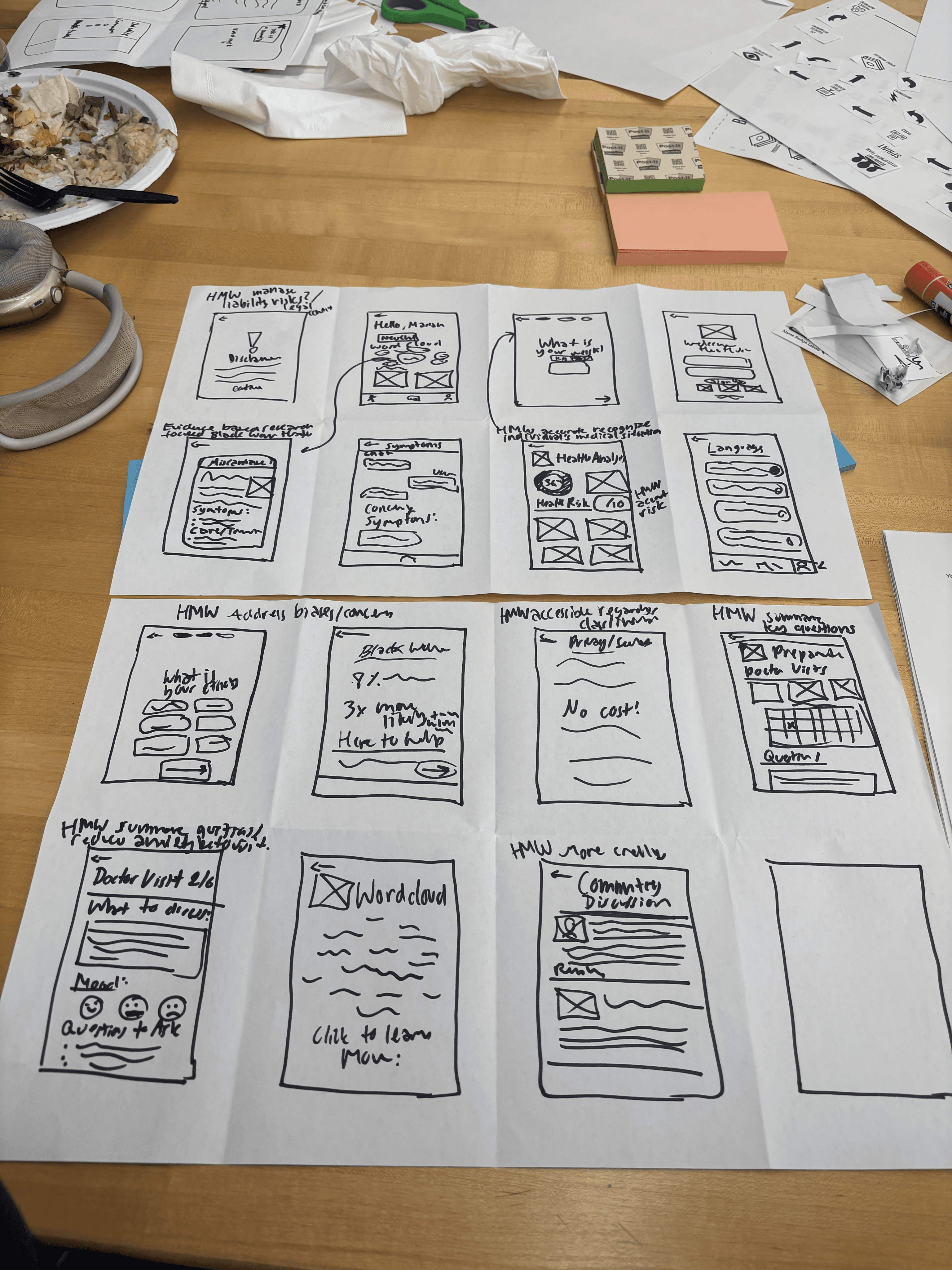
Initial paper iterations were designed for mobile, but we later transitioned to a web-based experience.
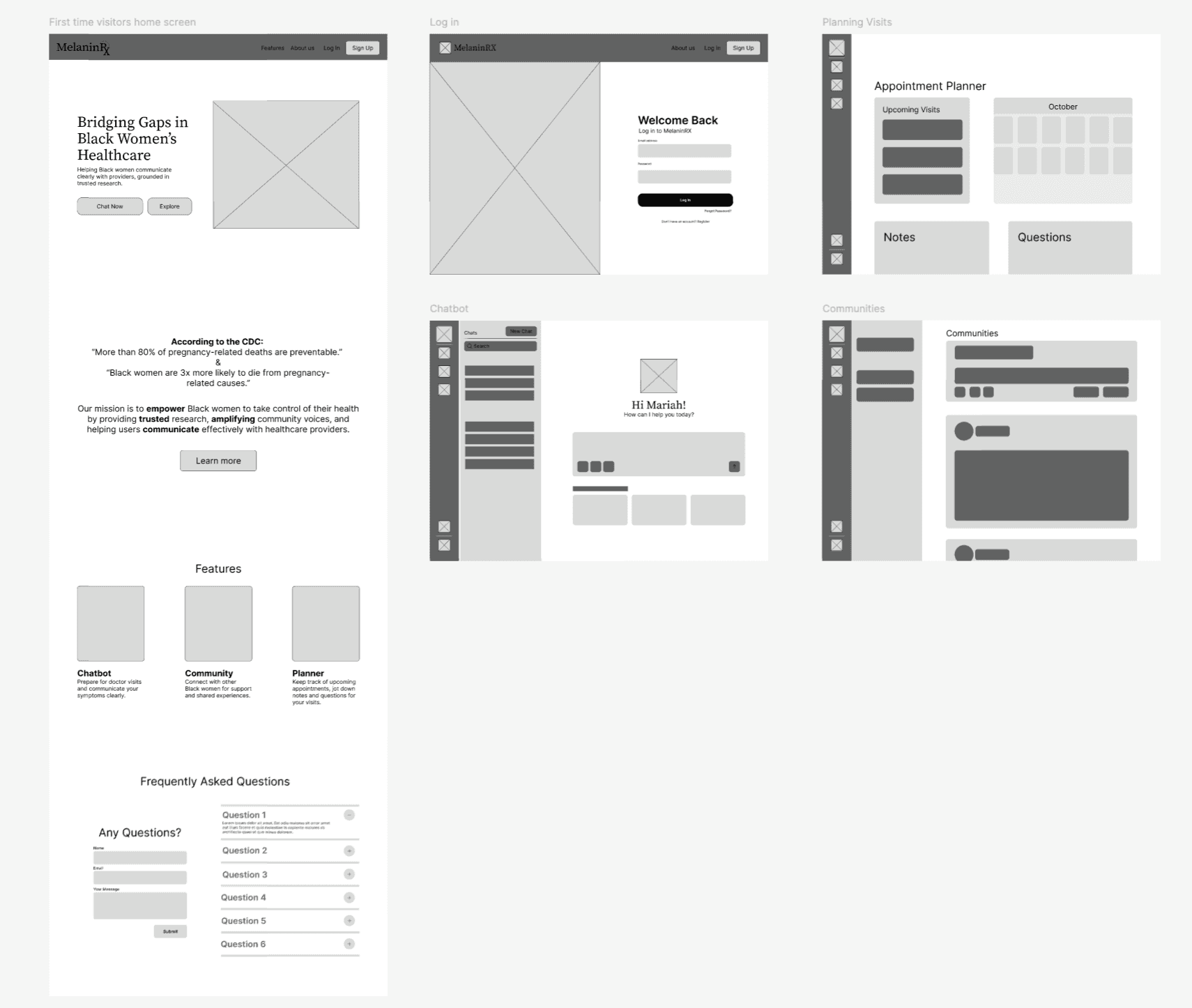
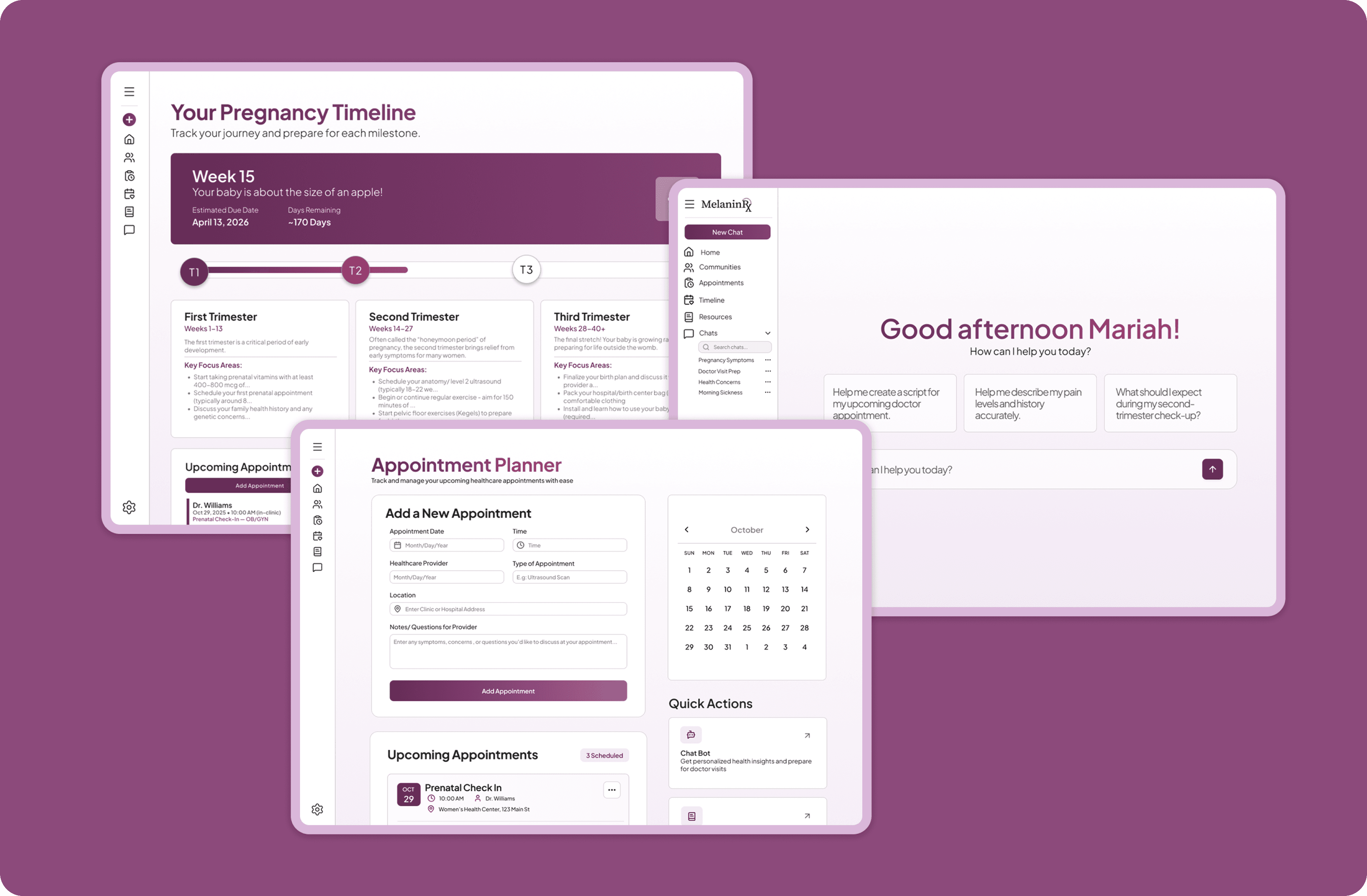
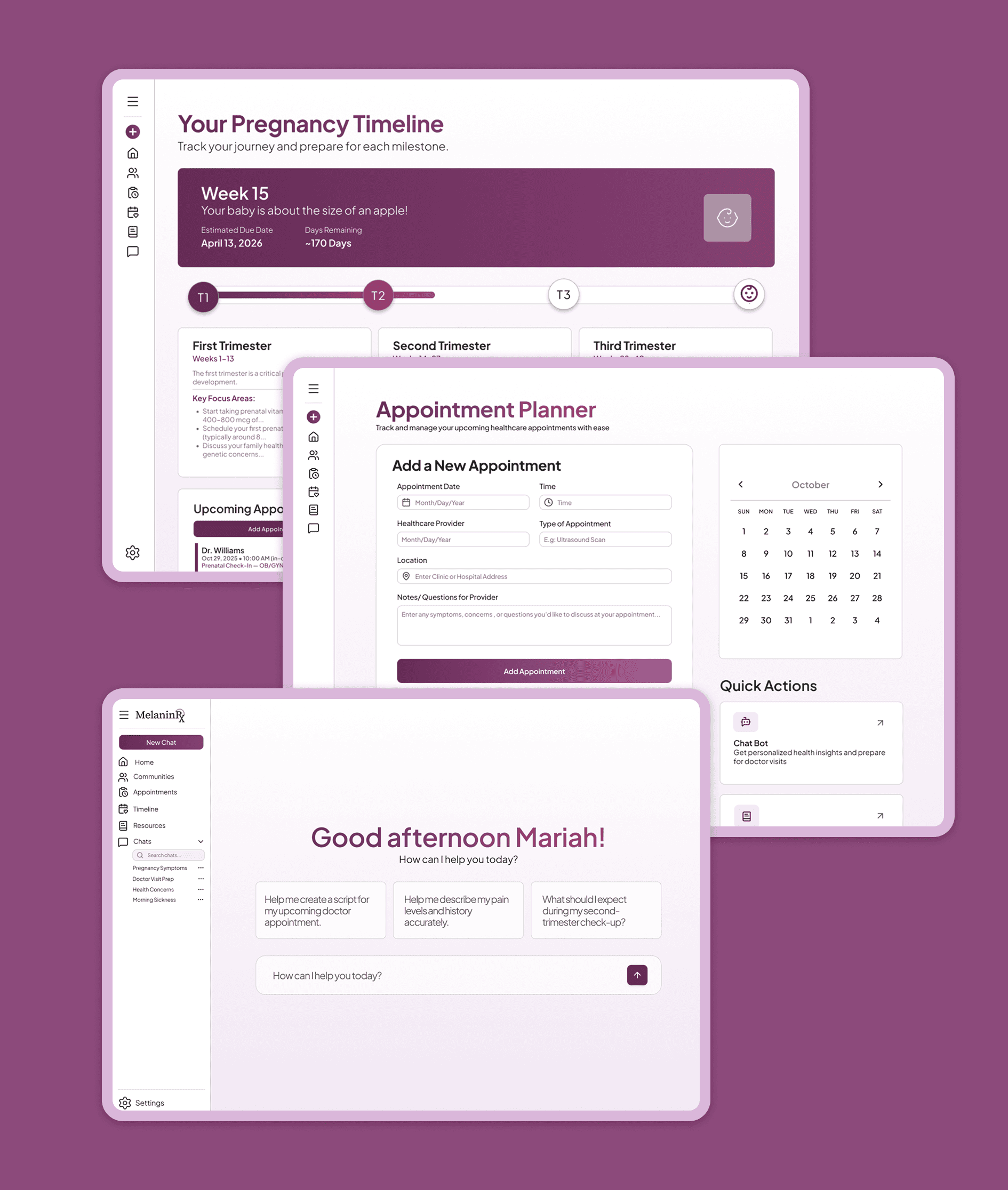
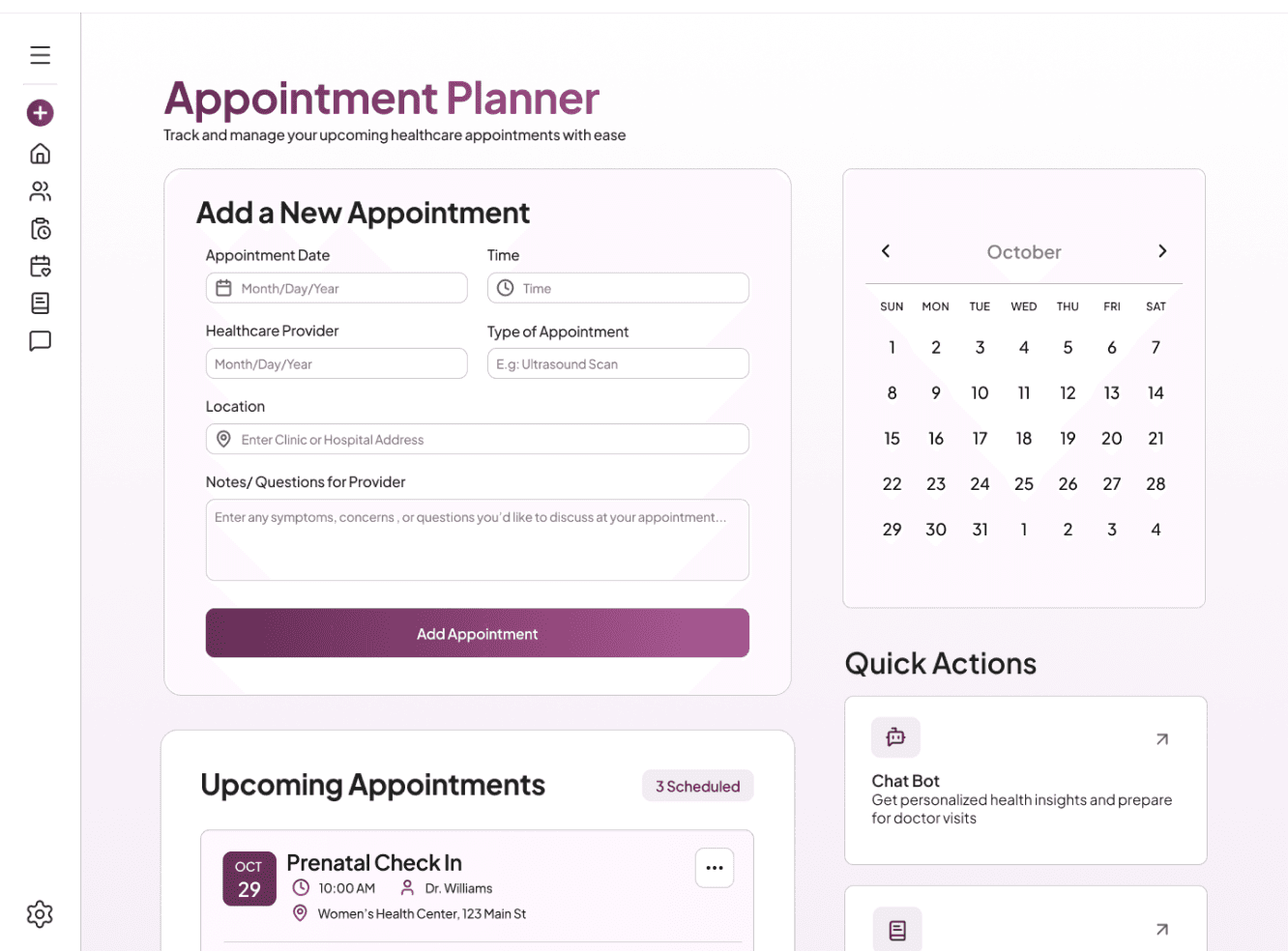
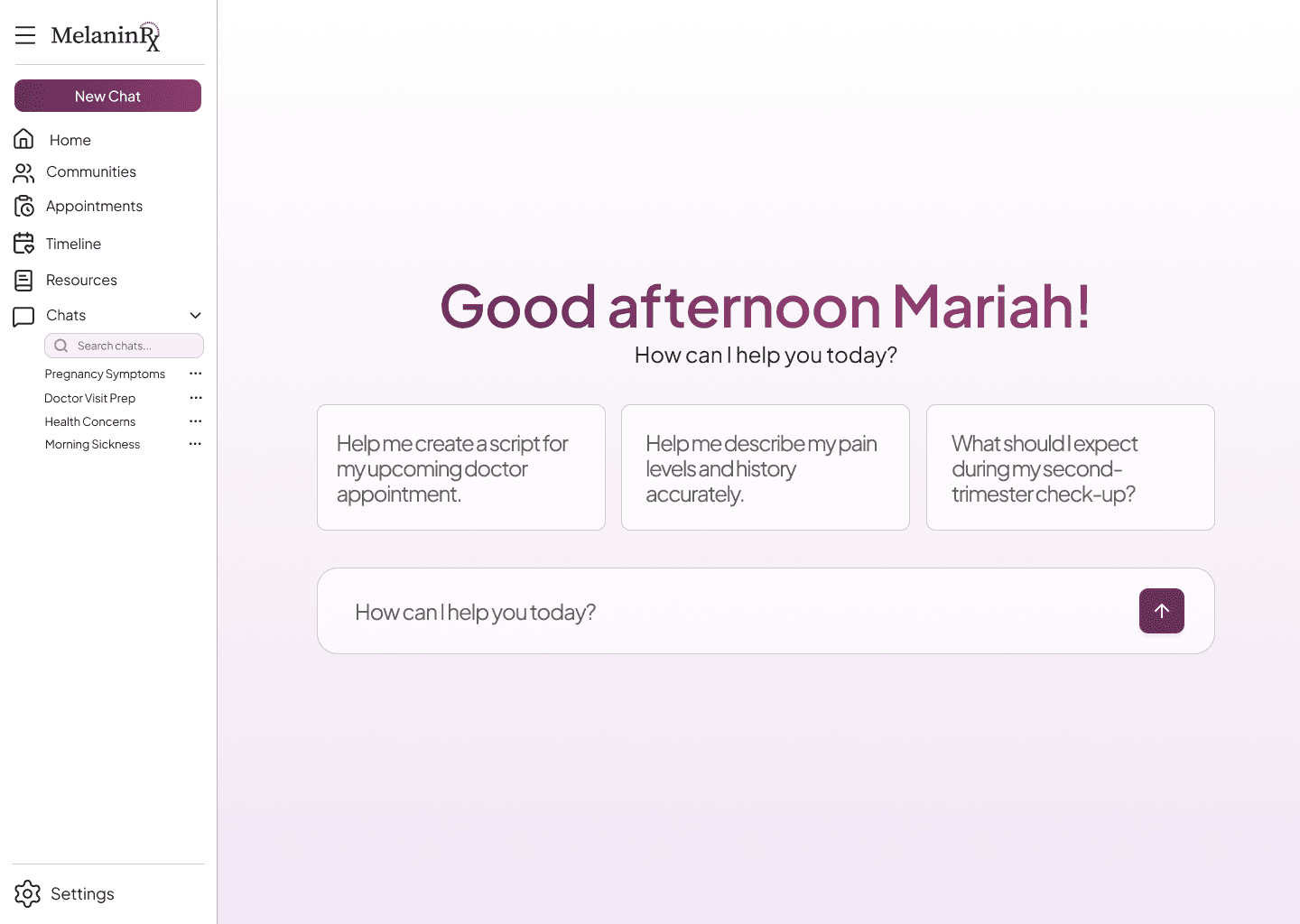
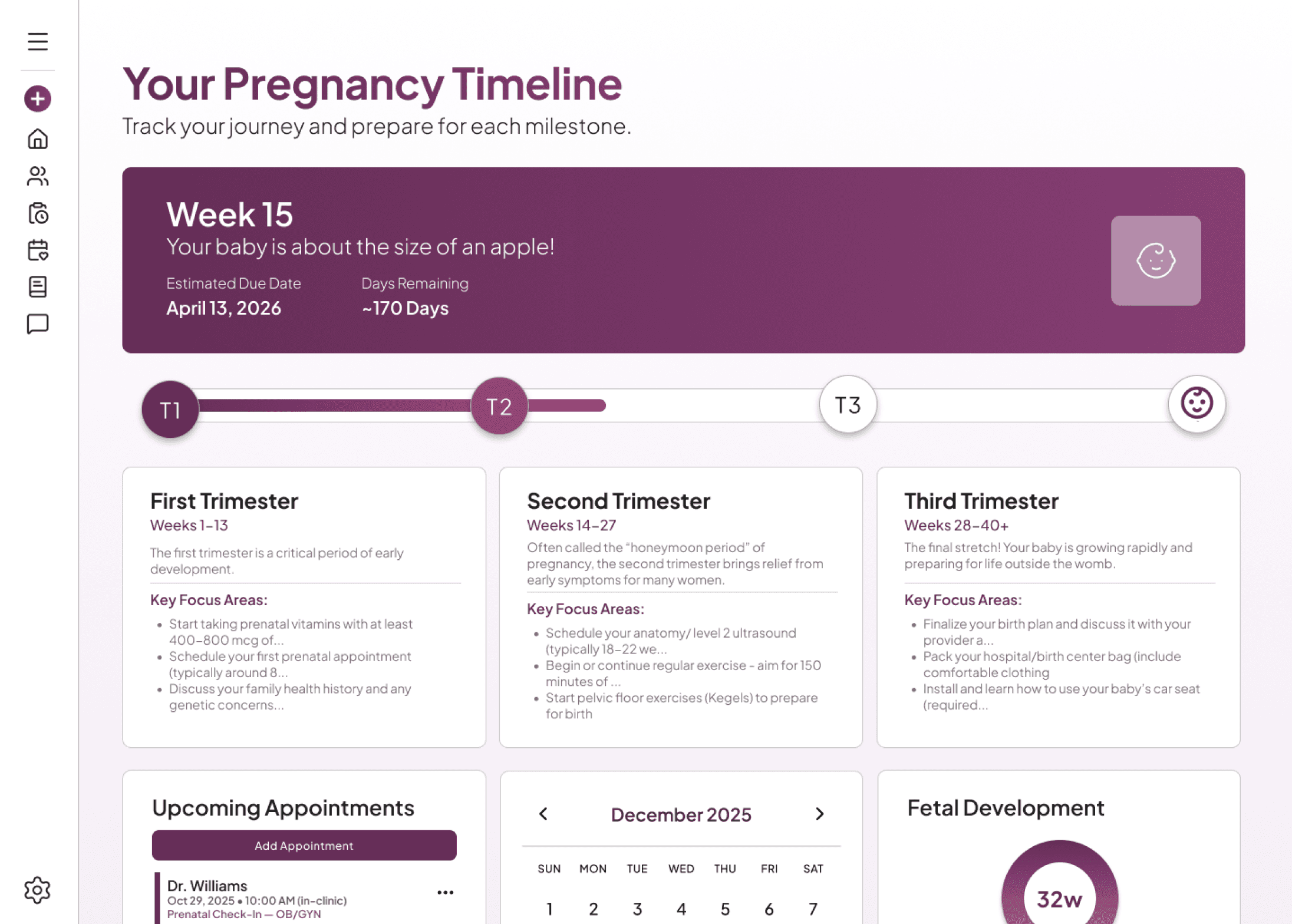
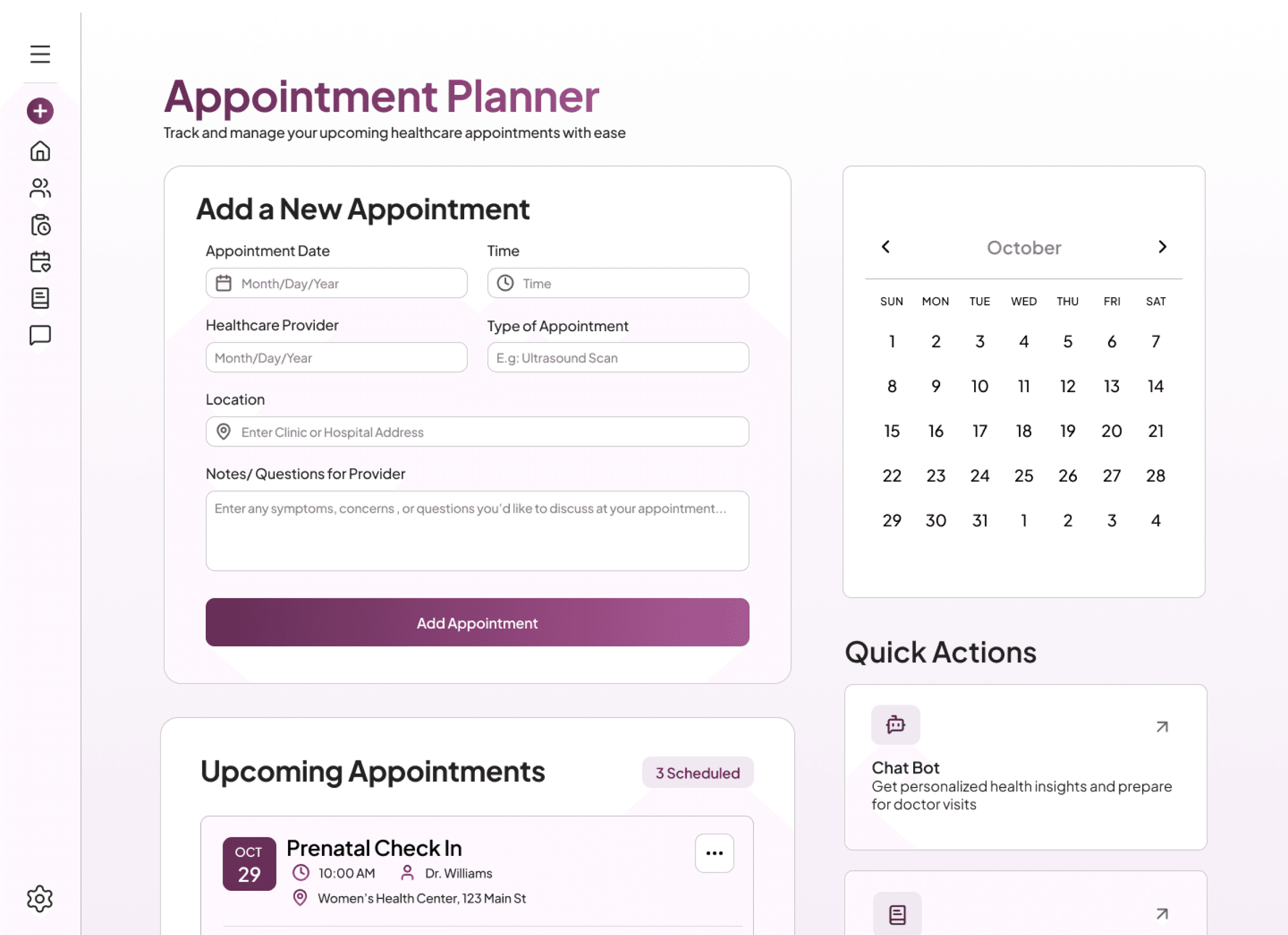
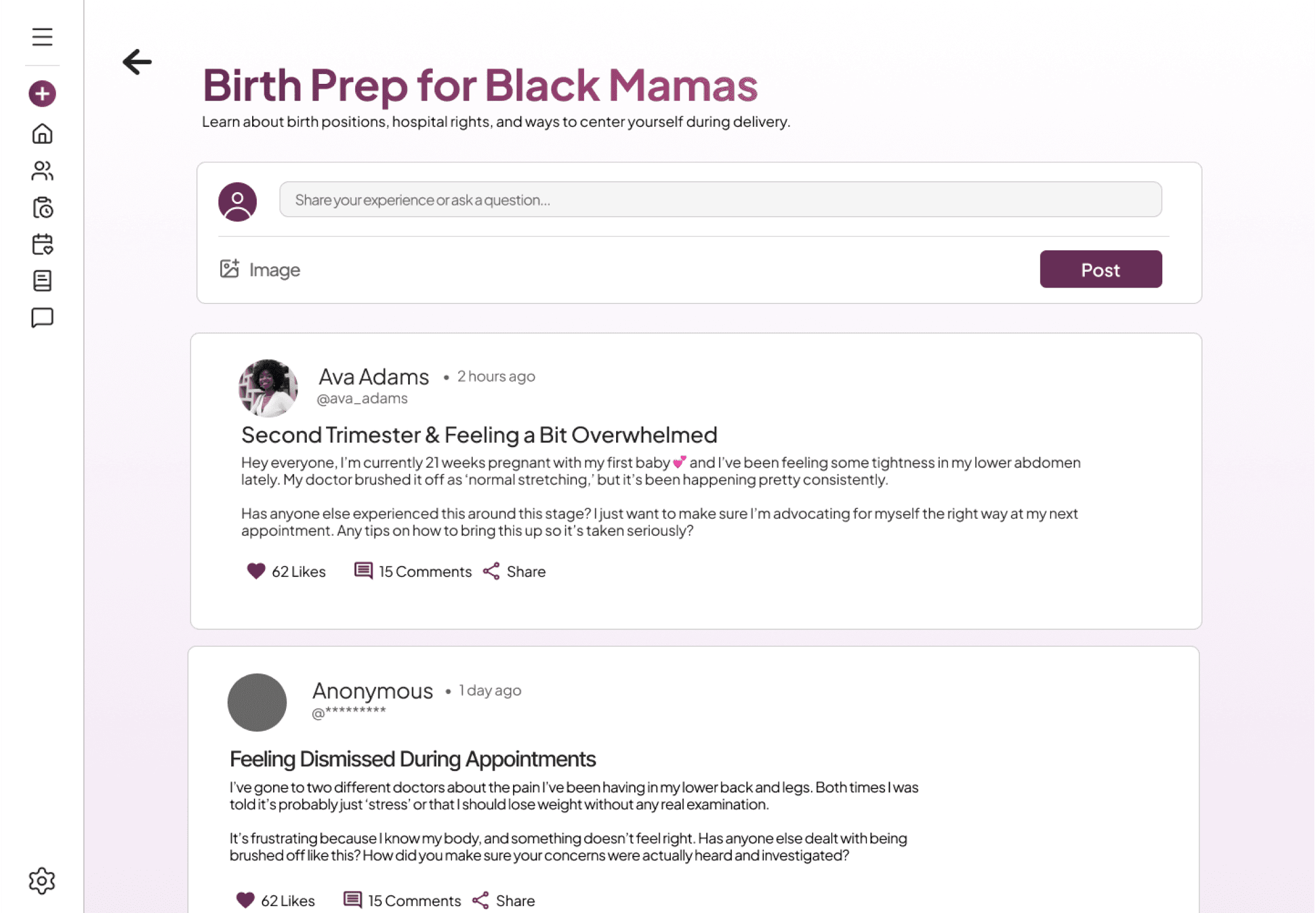
Early website wireframes included a Home Dashboard, Pregnancy Timeline, AI Chatbot, Appointment Planner, Resources, and Community spaces.
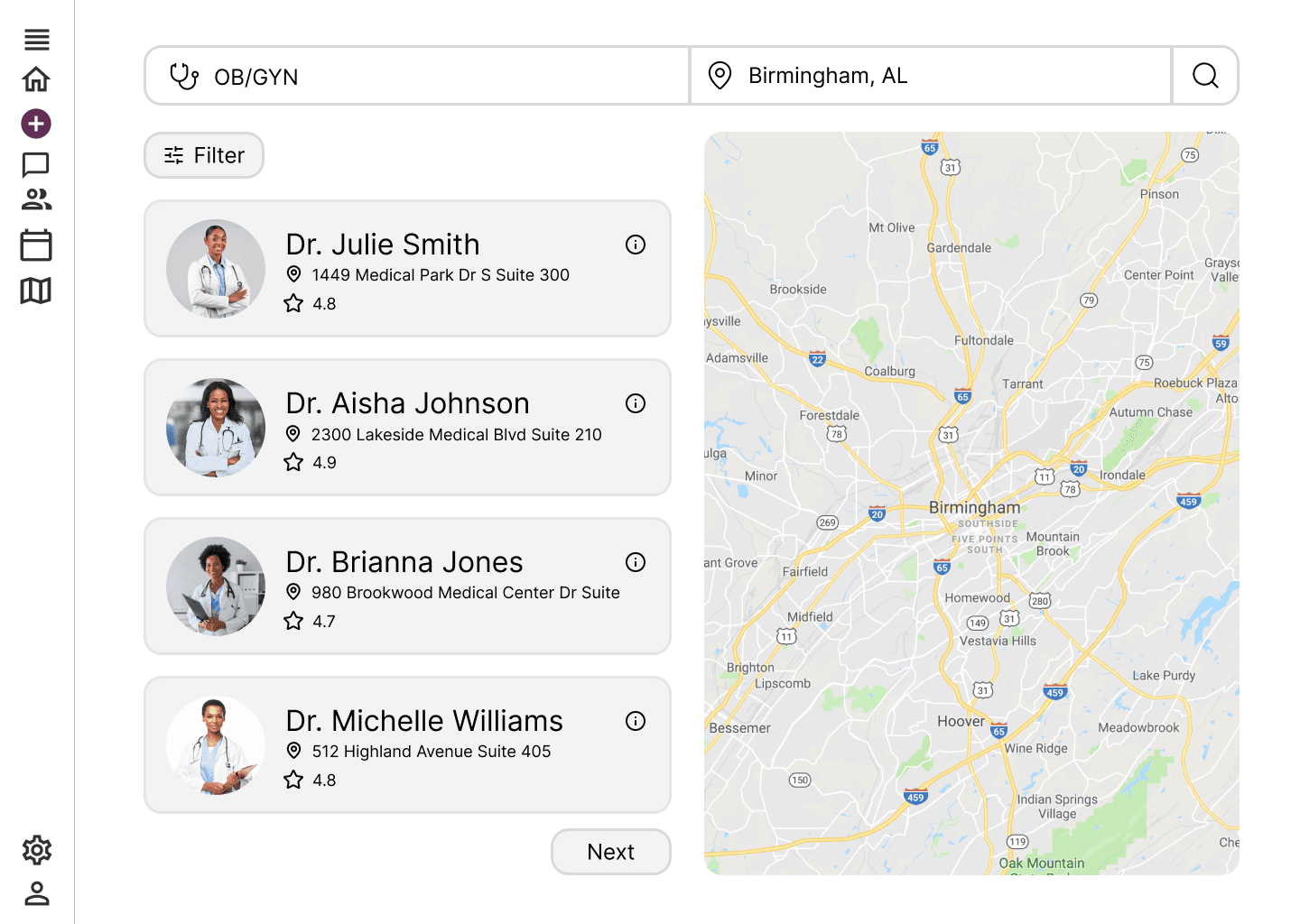
Features such as health diagnostics and provider-mapping tools were refined or removed based on user feedback and feasibility and comparison with other competitors.
OLD ITERATIONS
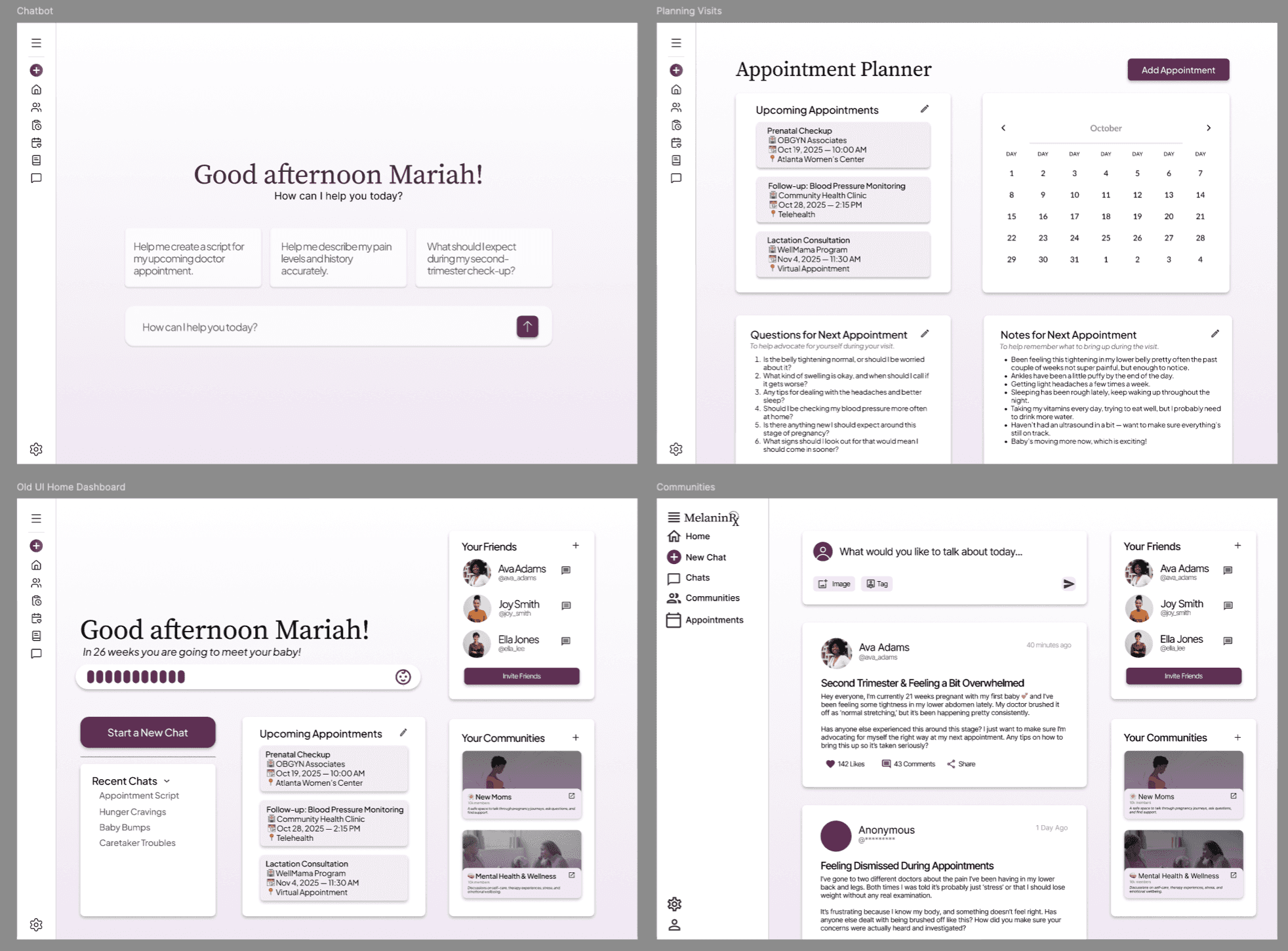
These early iterations focused on identifying the most impactful ways to support education, advocacy, and trust throughout the pregnancy journey. I explored multiple layouts and feature placements to understand how users might engage with tools like the AI chatbot, appointment planner, dashboard, and community spaces.
At this stage, the designs prioritized feature visibility and breadth, allowing users to access many tools from a single view. While this approach helped surface core functionality, user feedback revealed that the interface could feel overwhelming—especially for users navigating stress or uncertainty during pregnancy. These insights guided later design decisions to simplify layouts, reduce cognitive load, and emphasize clarity, emotional safety, and ease of use in the final designs.
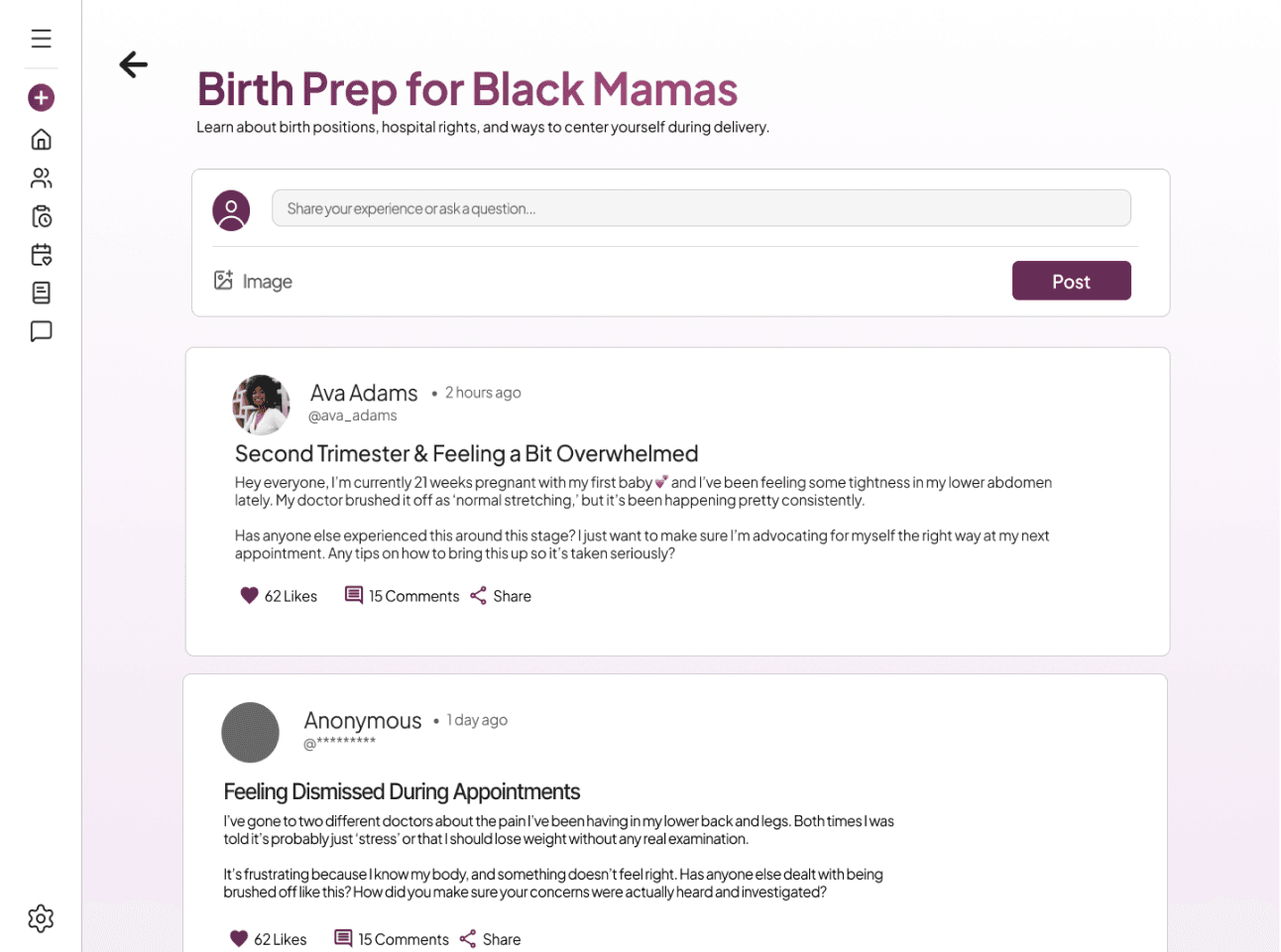
FINAL DESIGNS

REFLECTIONS
This project reshaped how I think about product design as a tool for equity and advocacy. Designing MelaninRX reinforced the importance of listening deeply to users—especially those from marginalized communities—and allowing research to guide meaningful pivots.
The process taught me that impactful design is not about adding more features, but about building trust, clarity, and emotional safety into every interaction. I also gained valuable experience iterating thoughtfully, balancing feasibility with user needs, and designing responsibly within the healthcare space.
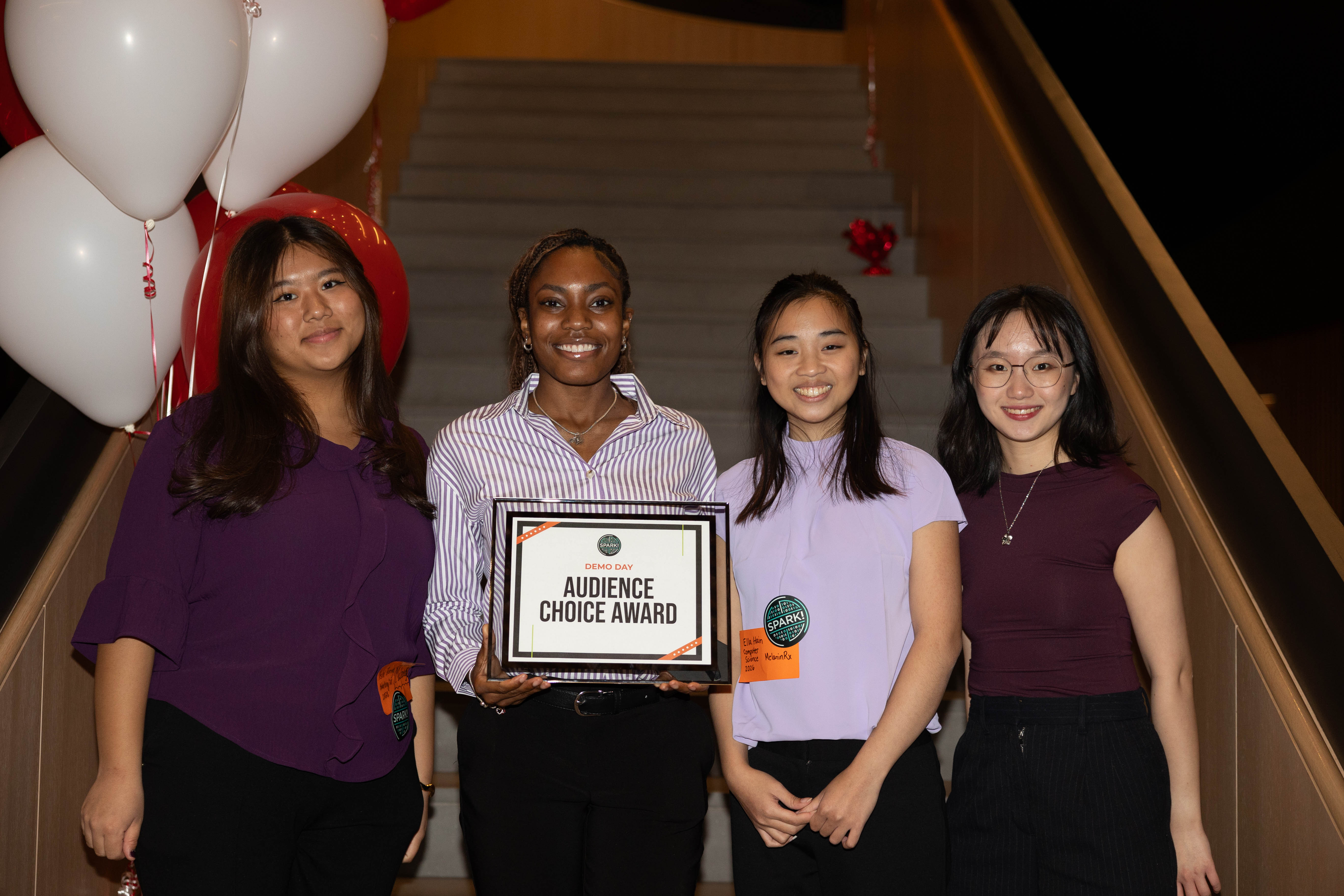
My team, as part of developing this product in our XC475 course, presented our product at BU Spark! Demo Day and won the Audience Choice Award.
IF I HAD MORE TIME...
If time allowed, I would conduct further user research across different stages of pregnancy to better understand how needs, anxieties, and decision-making evolve over time. This would allow MelaninRX to deliver more personalized guidance, anticipate key moments of uncertainty, and adapt content and features to users’ changing priorities throughout their pregnancy journey.
I would also explore deeper customization of appointment scripts to reflect individual health histories, risk factors, and communication preferences. Additionally, expanding community features—such as moderated discussion spaces or peer support groups—could further reduce isolation and build trust.
Finally, forming partnerships with trusted providers, doulas, and organizations focused on Black maternal health would strengthen credibility, expand resources, and help bridge the gap between digital support and real-world care.